

Hi, it’s Mehdi Yacoubi, co-founder at Mirage Metrics, where we build AI agents for industrial operations (construction, logistics, manufacturing, and mining).
This is The Long Game, a newsletter about technology, operations, AI, building a company, health, wellness and the decisions that compound over years. More than 5,000 people read it.
If you want it in your inbox, you can subscribe here:
In this episode, we explore:
Poison
Trying hard
Instagram relationship advice
Staying long enough to have an impact
Developing taste
Let’s dive in!
Health
Poison Everywhere
A topic near and dear to me. I alternate between phases of caring about environmental contaminants and phases of not caring at all!
Now, I’m in a phase where I care minimally about everything health- and optimisation-related, but this is still a good piece on the poison everywhere around us.
Is the furniture I sit in every day made with harmful substances? I don’t know. Are my plates, pots, and pans safe to eat from? No clue. And if they aren’t, there’s no way for me to assert my rights or collect a single penny from some faceless factory in Cambodia. If you think there’s any kind of quality control, there’s zero — nothing is getting inspected. Every nine months it turns out my protein powder contains heavy metals. The border can’t even stop counterfeit Rolexes from getting through, and the bar for listing a product on Amazon is the floor. I am sorry to say that for consumers, the buck stops with no-one but you. And your position is totally helpless.
Two years ago, I kept seeing these ads on the NYC subway. It’s so crazy: in one of the wealthiest cities on the planet, babies eating from lead-contaminated glassware is so pervasive a problem that a private company has to step up to do basic quality control.
NYC babies are not the only ones silently getting their IQs nuked because of careless manufacturers. Afghan children probably have the catastrophically highest levels of blood lead — even in the diaspora abroad — because virtually all the manufacturers of traditional Afghan cookpots were using lead-contaminated metals. Even when this was found out, it took Amazon over a year to take down the listings for the damn things. The level of public harm is off-the-charts. Chances are you don’t own one of these, but when’s the last time you might have eaten in a restaurant that does?
My main issue is that the line between caring about this topic and using it as a new pet obsession that prevents you from doing so many things in life and robs you of peace of mind is actually very thin.
The problem is so overwhelming that you almost can’t engage it. There’s just too much stuff to check on your own. This is catnip for neurotic Type-As. You’ll drive yourself crazy if you try to fix it. And, in fairness, none of these hazards are big and likely enough on their own to warrant your deep-dive attention. It’s in aggregate that they’re impactful: in your life, most risk factors aren’t an issue at all, but there’s probably something that needs to be found out and fixed. The only solution is to delegate it to a third party that you can trust to do a really thorough job. Only a business with this as its core competency is capable of the breadth and depth required for this Herculean task.
This is becoming a big business with players like Yuka, Oasis, Tap Score and more.
If you want to go down this rabbit hole, you’ll like these: A Chemical Hunger and How Trustworthy Are Supplements?
Lastly, on the main target of this decade, seed oils:
Genetic evidence and trials suggest seed oils are not harmful: they don’t make people fat, they don’t cause inflammation, they don’t cause cardiovascular disease, and so on.
Given all of that, why are people worried about seed oils? Not for any good reasons. Most of the anti-seed oil hype has to do with feelings that they’re unnatural, that they’re prepared in bad or disgusting ways, and so on—not on the basis of any meaningful, clinically acceptable evidence. The best arguments are based on mechanistic reasoning, but mechanistic reasoning sets up a game of ‘he said, she said’ because proponents of replacing saturated fat with mono- and polyunsaturated fats, seed oils, whatever, also have their own technical, mechanistic arguments and the bulk of the causal evidence.
Wellness
On Trying, and Doing More
Good news. It seems like “trying hard” is becoming sexy again. It was one of the main themes of Marty Supreme. This piece encapsulates well the cultural shift at play here.
“The truth is, I’m in pursuit of greatness,” he said, during an acceptance speech last year.
In this way, pursuing your dreams is inherently vulnerable. Publicly trying is like being naked in front of a crowded room (at one point in the movie, Marty literally drops his pants at a party so a millionaire can smack his ass with a ping pong paddle, because the price of his humiliation is a ticket to Japan).
Whether you’re getting naked in front of someone else or putting yourself out there in pursuit of your dreams, this kind of confidence is inspiring and magnetic. It’s why I love Addison Rae.
Rae, who grew up in Louisiana, blew up filming short dance routines on TikTok in high school. When she started posting (up to eight videos a day), her peers rolled their eyes with a who does she think she is lilt. After she moved to LA and rebranded as a bubbly, rainbow-coloured baby Britney, she received further backlash for her hyper-curated new image.
“Everyone’s always like oh she’s trying too hard this, she’s trying too hard that—how about you try at all?” she cheerily quipped on a YouTube podcast. “We can tell you’re not!”
Let’s make nonchalance uncool, and caring too much great again.
The social faux-pas of caring too much is defined in the novel Martyr!:
“He felt a flash of familiar shame—his whole life had been a steady procession of him passionately loving what other people merely liked, and struggling, mostly failing, to translate to anyone else how and why everything mattered so much. He realized he was perhaps doing . . . The Thing, the overlooking thing, obsessing over something in a way that others felt to be smothering.”
Remember how Gwyneth Paltrow cried when she won her first Oscar at 26 and we all hated her for it? She was too good, she cared too much. She was a nepo baby and a gifted actress? We didn’t know what to do with that, so we made her a meme.
Yet, when Josh Safdie explained why he wanted Gwyneth to sign on to star in Marty Supreme, he said:
“Gwyneth, she’s got that dog in her, as the kids say.”
In this sense, the path to success is shaped like a horseshoe, in which what’s perceived as “too much” at the time can be seen as cool down the line. Obviously, this can’t be a motivation for going after your dreams (otherwise it’s not about your dreams, but something else, like popularity etc), but it’s an interesting potential byproduct that proves that, even when it doesn’t seem like it, trying IS sexy!
Pair with:
The only way to have more energy is to do more
Better Thinking
Instagram is training you to leave people who love you
This is a fascinating one.
Right now, love is something that is mediated by a third presence, i.e. your social media feed. The “relationship discourse” people talk about is pure governance. The algorithm calibrates and observes affective fluctuations like longing and feeds back content that stabilizes you in that state until it hardens into identity. You are entrained into the conclusions.
How does the lack of Cognitive Security affect relationships? ent, attachment, and reverence can exist together. A mind subjected to constant short-form penetration loses attention and coherence, and becomes porous.
A porous mind cannot sustain love, because love demands the capacity to hold ambiguity without converting it into accusation, to endure friction without outsourcing interpretation to strangers. The feed dissolves that capacity, and it trains you to experience discomfort as evidence (that it is not working) and patience as self-betrayal.
The mechanism is banal and devastating. Stress weakens the prefrontal restraint that mediates impulse. The subject reaches for reels out of anesthesia. And anesthesia is precisely the state in which beliefs can be implanted without resistance. Repetition completes the work, while familiarity starts to replace truth. The second exposure does most of the damage; after that, the narrative no longer feels imposed, and it starts to feel self-generated. You stop saying “this is what I saw” and begin saying “this is how I see.”
This is why the algorithm becomes lethal to intimacy. When a relationship enters turbulence, the feed does not show you how to repair the relationship with loved ones. You won’t be seeing it on trending. Rather, it shows you how you need to break up. A single pause on content about “toxic men,” “bare minimum,” “emotional labor”, “over giving,” “choosing yourself,” etc is enough to initiate escalation. The system infers vulnerability and clusters content accordingly. Your partner is reclassified from person to problem.
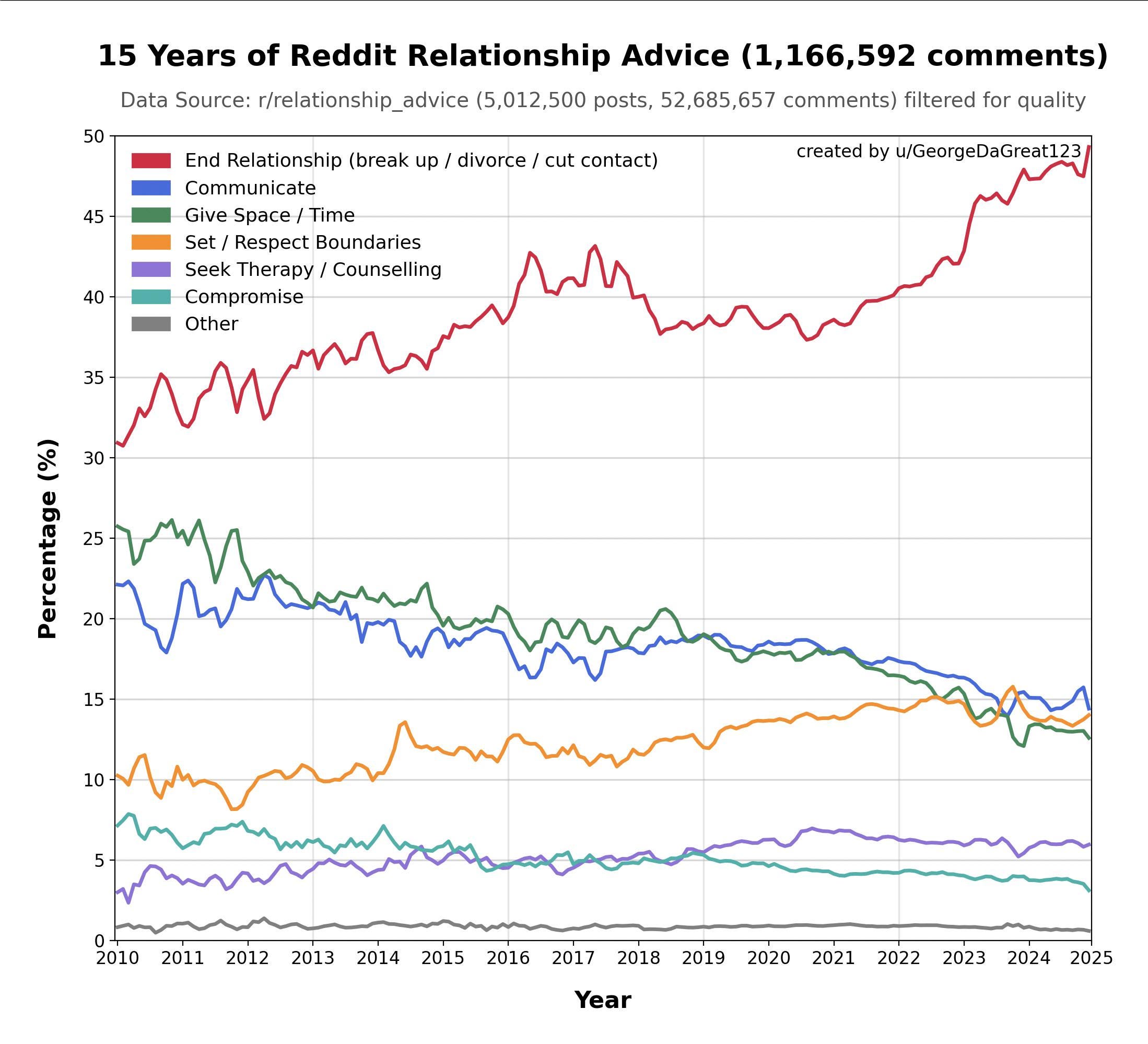
Another essential piece of the equation is to understand where the LLMs you’re using every day were trained. It turns out they were trained on relationship advice subreddits that overwhelmingly promote ending the relationship.
Pair with: instagram is unchic
Instagram is addictive. If not because of its social feedback loop, because of the way it plays with the mechanical demands of our brains.
AI Updates
The Implementation Gap
I read this post this morning, and found it really correlated with what I see on the ground with our clients and in our pilots at Mirage Metrics.
Silicon Valley thinks AI agents are a $20/mo self-serve subscription.
Main Street is paying local agencies $10,000 just to turn them on.
Everyone assumes AI will be bought primarily online like Slack or Zoom. I think they are wrong.
Some of the biggest winners in the AI boom won't be the software vendors. It will be the humans installing it.
Here is the reality of SMBs right now:
• 54% lack internal AI expertise.
• 41% have data quality too poor for AI to even work.
• 41% already prefer buying AI through a local IT provider.
You cannot "1-click install" a genius AI into a messy CRM or a 15-year-old server. It will just execute the wrong tasks at the speed of light.The AI software will be cheap and a lot will absolutely be bought online. Making it actually work for a messy, real-world business will be expensive.
Very bullish on the "Do It For Me" economy being back.
Real businesses are messy. Fragmented systems. Bad data. Exceptions everywhere. The gap between buying AI and deploying it is massive. The value won’t be only with who sells the model. It will sit with who makes it work.
connect to the stack
understand the workflow
structure the data
define what the system can actually do
You don’t drop AI into chaos and get leverage. A lot of the value will be captured by the companies that deploy, integrate, and operationalize. That gap is currently where most of the value is.
Pair with: Services: The New Software
The next $1T company will be a software company masquerading as a services firm.
Every founder building an AI tool is asking the same question: what happens when the next version of Claude makes my product a feature? They’re right to worry. If you sell the tool, you’re in a race against the model. But if you sell the work, every improvement in the model makes your service faster, cheaper, and harder to compete with. A company might spend $10K a year for QuickBooks and $120K on an accountant to close the books. The next legendary company will just close the books.Intelligence vs Judgement
Writing code is mostly intelligence. Knowing what to build next is judgement.
Translating a spec into code, testing, debugging: the rules are complex but they are rules. Judgement is different. It requires experience and taste, instinct built on years of practice. Deciding which feature to build next, whether to take on tech debt, when to ship before it’s ready.
Startup Stuff
Staying Long Enough to Have an Impact
This is important and not said enough:
Career advice: Stay long enough to have an impact
I’m seeing many folks who exhibit the following pattern:
- Do a role for 12-18 months
- Change roles
- Repeat
They are “job optimizers”, constantly on the lookout for something better, almost from the moment they land in a new role. The purpose of their current role is to help them find their next role.
If this is you, stop. Take a breath. Embrace your current role. In fact, fall in love with it. Throw yourself into learning, building and having impact. You need at least 3-4 years at a company to have real impact. Have impact with measurable outcomes, and the next role will take care of itself. If you do great work at a good company, word will get out and you will never need to look for a job again. Plus, the joy and satisfaction of having meaningful impact is reward in and of itself.
Frank Slootman offers a few other reasons why employers see too many short-tenured jobs as a red flag.
In the words of Frank Slootman:
Avoid having a series of short-tenured jobs on your resume, especially if you can’t name specific accomplishments at each one. It is hard to lay real tracks at any workplace in just 12-to-18-month stints. You may be unhappy and frustrated in your current role, but try to stick around long enough to make something of it.
Several short tenures in a row also imply that you had poor judgement in choosing those roles or perhaps that you’re the kind of person who gets into chronic conflicts with management. One brief tenure will be seen as a fluke by future employers, but a series of them will be seen as a red flag. The shortest tenure I ever had was three years; all of my others were in the five-to-seven-year range.
No matter how fast a business tries to move, things take time. I see it every day at Mirage Metrics: deals take time, implementation takes time. You can’t have a serious impact in 12 months.
Pair with: Hire people who give a shit.
What I Read
White Collar Goes Blue
A working theory on the rights and reshaping of the professional laptop class.
AUTONOMY. CREATIVE OWNERSHIP. A SEAT AT THE TABLE. The right to say no, not like that, or not right now. Flexible schedules. Remote work. A title that keeps getting better. The expectation that your opinion shapes direction. The expectation that your resources scale with seniority.
These are among what I call luxury workers’ rights. They sit on top of human rights, civil rights, and workers’ rights. They’re the terms of a job meant to make work feel more meaningful and make you feel more valued. We typically associate them with white collar work and view them as moral principles, but they’ve always been a form of compensation for the scarcity of cognitive labor.
White collar work as we’ve known it is cognitive labor with a personhood premium—autonomy over the work itself and value attached to the person doing it. Cheap capital and high margins made it easy for companies who needed human intelligence to pay these premiums. Software’s surplus has been subsidizing our ego-scaffolding. But we’re facing the big shift now.
The early narrative was that AI would kill blue collar jobs first, but it turns out the real world is full of friction, and in the meantime, AI got a lot better at thinking. So it’s white collar work that’s exposed. AI is making intelligence abundant, and when the scarcity of anything drops, the premiums drop with it.
If you strip white collar jobs of their luxury rights, the line between blue and white collar gets a lot thinner. The professional laptop class is staring down its biggest reshaping and identity crisis since industrialization.
The lies I used to tell myself
A good piece.
Intuition is fake and rationality solves everything.
I used to be horribly judgmental of people who made decisions based on intuition, as in, “I just do what feels right.” And then I noticed that whenever I overrode my intuitions, I made terrible decisions. I hired the wrong people, started projects with the wrong people, dated the wrong people, ate food that made me feel bad, did forms of exercise I found unfun and injurious. I don’t have a satisfying theory for why this is, but I know what happens: When I shift from emotional intuition to a logical story about a decision, it’s much easier for my reasoning to get hijacked by plausible-sounding directives that turn out to be nonsense.
It took me a long time to learn this, and that might have something to do with my training in law and poker. Overriding intuition in favor of explicit reasoning makes sense in contexts that reward systematic rationality, where you will get separated from your money if you count on gut feelings. But most of life isn’t a closed system with enumerated rules and clear outcomes. If you try to explicitly name all the factors that make someone a good friend or co-founder, you might come up with some good indicators, but your crude map will also mislead you about the territory.
This is why “wisdom is knowledge that can’t be transmitted.” Wise people have navigational skill, not a long list of rules.
Pair with: The MindBody Prescription, Dr John E. Sarno
On Parenting
A few interesting stuff I saved recently:
Scott Alexander’s parenting piece and his apparent lack of control at home
On being authoritarian sometimes
Millennials spend way more time with their children than past generations, men do way more tasks at home, and although it was believed that men's involvement would increase fertility, it actually seems to lead to the opposite effect (correlation is not causation, though!)
The Blueprint for Raising Elite Kids: It Starts with You
Brain Food
Are You Developing Taste or Performing It?
Everyone is talking about taste these days.
This meme is a good description of what many call “taste”, maybe a bit outdated, but you get the idea.
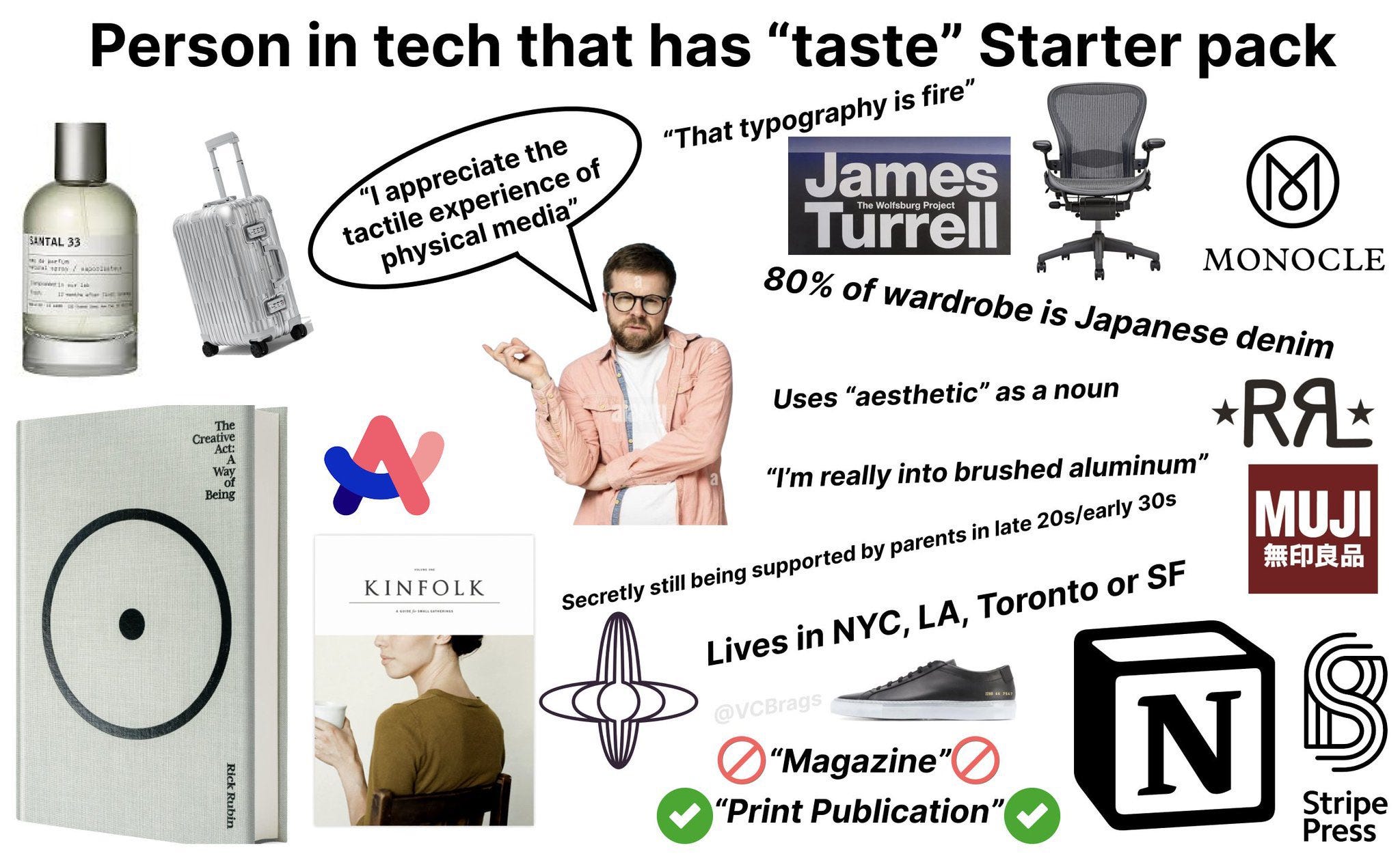
This is a great piece on the topic.
Taste has become the most talked about quality in fashion right now.
The tastemaker is having a moment, and everyone wants to be one. Someone with niche expertise and point-of-view that can’t be bought. Podcasts are debating it, creators are defining it, entrepreneurs are paying a premium for it. And the entire internet is attempting to reconstruct Carolyn Bessette-Kennedy’s wardrobe in pursuit of it.
But it didn’t come from nowhere. Last year, a particular kind of fashion exhaustion set in. We saw it in our feeds, in our wardrobes, maybe even in ourselves. Everyone was looking the same, sounding the same, shopping the same. The algorithm served it and the market was ready to sell it. And somewhere along the way getting dressed stopped feeling like self-expression and started feeling like a performance.
Taste became the antidote, but the solution is starting to look a lot like the thing it was trying to solve. So how did we get here?
I find tools like Pinterest, Instagram and TikTok are making the taste question particularly interesting and complicated because you see many groups of people with the exact same “packaged taste”. Go to any popular coffee shop on a weekend, and if you watch people, you can almost certainly envision their For You page.
The same goes for reading lists, references, etc.
The resolution isn’t a reading list, or a set of references, or a more sophisticated version of consumerism. It’s the willingness to sit with the question before reaching for someone else’s answer. To make the wrong purchase and pay attention to why it was wrong. To admire Carolyn Bessette-Kennedy’s wardrobe without trying to replicate it - because admiration is where taste begins, and copying is where it ends.
The capsule wardrobe didn’t fail because the idea was wrong. It failed because it got separated from the most important word in the original premise: your wardrobe. The individual was removed from the equation before the equation was solved.
The taste movement is making the same move. The search for an original eye is being outsourced, and that’s the problem.
Tastemaker content doesn’t help you find your taste. It helps you perform someone else’s version of it. Yours is still waiting. It just needs space to surface.
Pair with: Taste Is Eating Silicon Valley.
Products make you feel something when you use them, and they make other people feel something about you.
Products are no longer just functional tools; they are emotional touchpoints. Increasingly, products are designed as vehicles of self-expression and social signaling, reflecting your values, lifestyle, and identity. Products with technology at their core are closer than ever to art.
If true, this also means that other players become critical to the ecosystem: artists, designers, creators, creative directors, media companies. And more questions inevitably arise:
Who are the kingmakers and gatekeepers of taste? What culture war will the greater focus on taste ignite? Does the city or culture a company is created in matter a lot more? Nobody owns “taste,” but enough people will certainly try.
What I’m Watching
Clavicular is What Nietzsche Warned Us About
Pair with: Similar things are happening on the women's side of the internet.
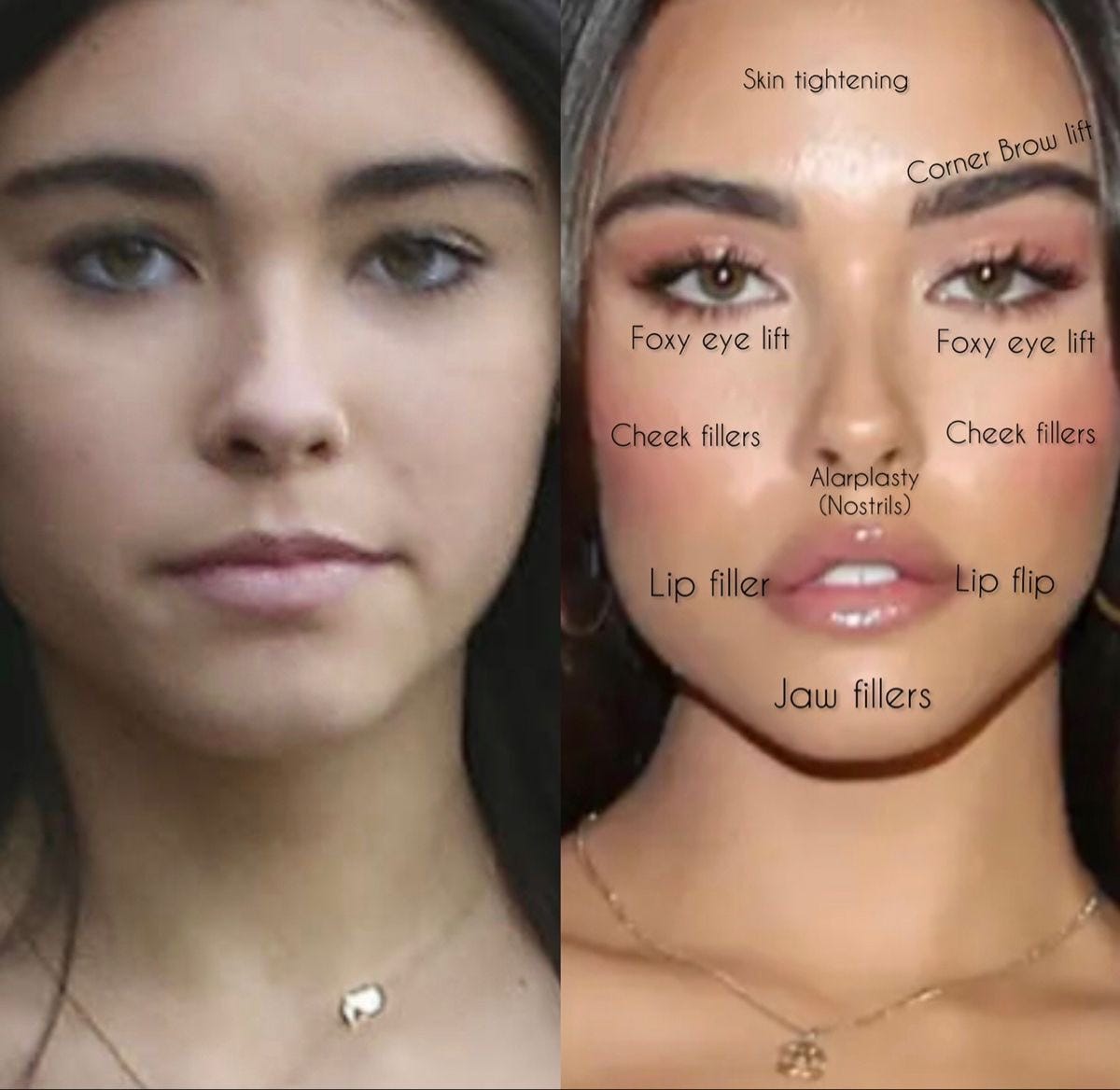
this is what happens when people remain unmarried in cities for too long and the same pattern reveals itself in men through looksmaxxing. as a species, our biological drive is to pair-bond and reproduce. when that drive is blocked or indefinitely delayed, it doesn’t disappear; it gets redirected.
we start seeing strange substitute behaviors: excessive grooming, hyper-fixation on self-improvement, and constant optimization. the brain has mating energy and anxiety that need somewhere to go, so instead of being expressed through bonding and reproduction, it gets funneled into endless “improvement” and the belief that this will be the final thing that fills the void and secures the love you're looking for but it ends up magnifying the core feelings of rejection and now it's also within yourself, the ultimate self betrayal.
Dirt Newfoundland
One of the best series on YouTube, by far.
The Tool of the Week
Some good perfumes
I’ve been geeking a bit over perfumes lately. Some good options here, here, here, here and here.
Quote I’m Pondering
Everyone wants to win until they realize how many losses it takes. Lock in.
— Scottie Pippen

EndNote
Thanks for reading,
If you like The Long Game, please share it or forward this email to someone who might enjoy it!
You can also “like” this newsletter by clicking the ❤️ just below, which helps me get visibility on Substack.
Also, let me know what you think by leaving a comment!
Until next time,
Mehdi Yacoubi
Another great one. Appreciate these
Been following your pieces for a long time - thank you for continuing to share your thoughts! They promote such interesting conversation in my house.